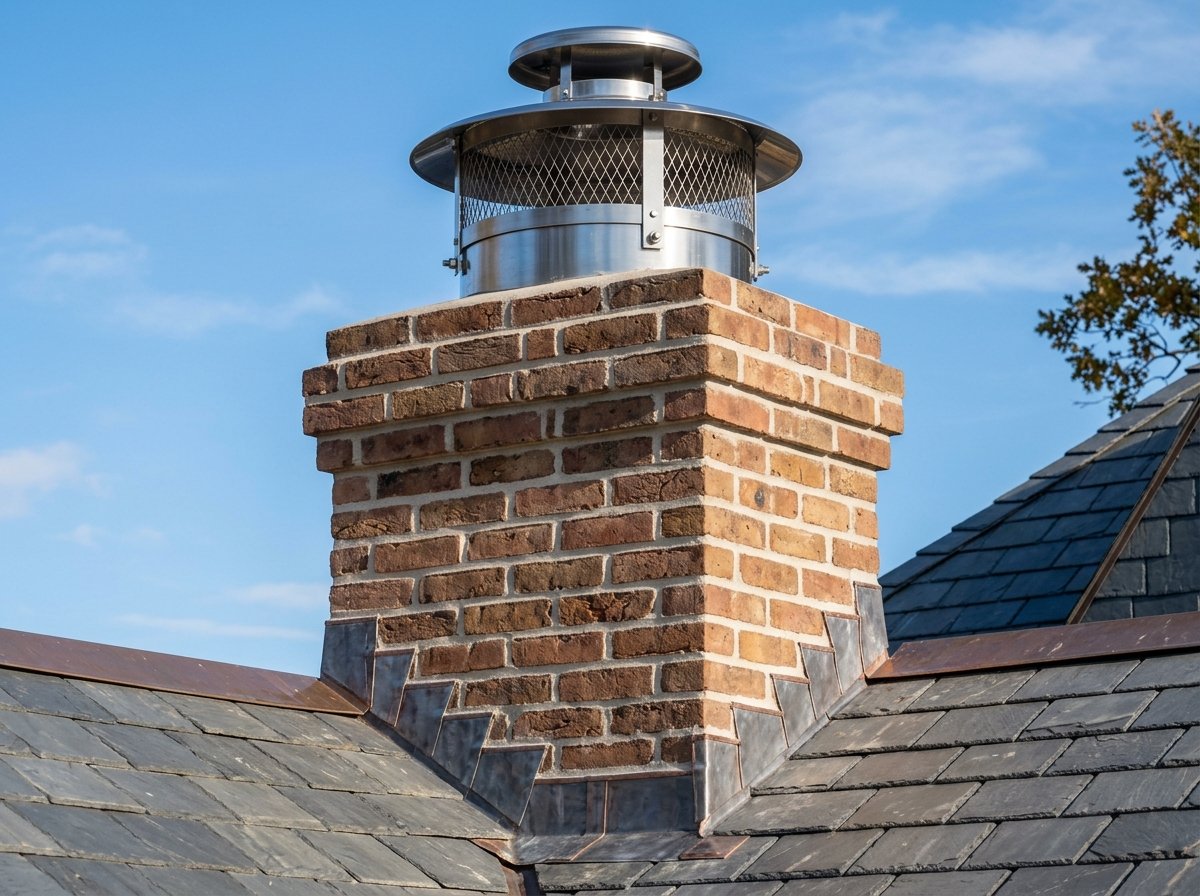
Chimney Sweeping Craftsmanship
01 / SWEEPING & CREOSOTE REMOVAL

CHIMNEY CLEANING & mechanical creosote neutralization

CSIA-certified sweeping, high-torque rotary scrubbing, and surgical HEPA negative-air containment. We eliminate combustible creosote deposits while preserving your interior finishes.

THERMODYNAMIC RESIDUE
“Creosote is not simple soot. It is a concentrated chemical distillate that fuels intense 2,000°F chimney fires.”

Every time unseasoned wood or fossil fuels combust, volatile hydrocarbons draft upward into the cooler chimney flue. As flue temperature falls below 250°F, these gases condense into creosote—transitioning from powdery soot into a flammable, hardened glaze.

Our certified sweeps scour the entire vertical stack using rotary poly and wire whip assemblies sized to the exact interior profile of your flue tiles or stainless liner, paired with industrial triple-filtration HEPA extraction.

NFPA 211 MANDATE
1/8-INCH THRESHOLD

According to NFPA Standard 211 § 14.2, chimneys must be swept clean whenever creosote deposits reach 1/8-inch thickness, or when Stage 3 glazed deposits are detected.

CONTAINMENT RATING 99.97% @ 0.3 MICRONS
THE SWEEP PROTOCOL

FOUR-PHASE PRECISION PROCESS

01

Hearth Isolation

Double canvas runners from entrance to hearth. The firebox is enclosed with negative-pressure industrial HEPA filtration vacuums to prevent particulate drift.

02

Rotary Power Scour

Mechanical rotating whips systematically travel the entire vertical flue, dislodging Stage 1 and Stage 2 creosote deposits from tile corners and corbelled joints.

03

Smoke Chamber Parge

The corbelled throat, smoke shelf, and damper housing are hand-brushed, vacuumed, and evaluated for draft restrictions and corrosive pitting.

04

Clearance Certification

A comprehensive written evaluation is issued certifying operational readiness, NFPA 211 clearance compliance, and next maintenance scheduling.

EXPERT INQUIRIES

FREQUENTLY ADDRESSED QUESTIONS

The National Fire Protection Association (NFPA) Standard 211 recommends that all chimneys, fireplaces, and vents be inspected at least once annually, and swept whenever creosote deposits exceed 1/8-inch thickness. Even chimneys burning gas logs require annual inspections to clear corrosive acidic condensates and nesting debris.
No. We utilize commercial triple-stage HEPA containment vacuum systems that maintain continuous negative air pressure at the firebox opening. Canvas floor runners and protective boot covers ensure that delicate rugs, hardwood flooring, and fine furnishings remain completely untouched.
Soot is a light, powdery carbon residue that brushes away easily. Stage 3 creosote is a dense, hardened, glassy tar coating formed under restricted oxygen conditions. When ignited, Stage 3 creosote burns at explosive temperatures exceeding 2,000°F and requires specialized chemical treatment or mechanical flails to safely remediate.
Estate at Night
PREVENTIVE CARE

RESTORE YOUR FLUE TO PRISTINE INTEGRITY.

CSIA-certified sweeping, Level 1 & 2 camera diagnostics, and complete HEPA hearth protection.